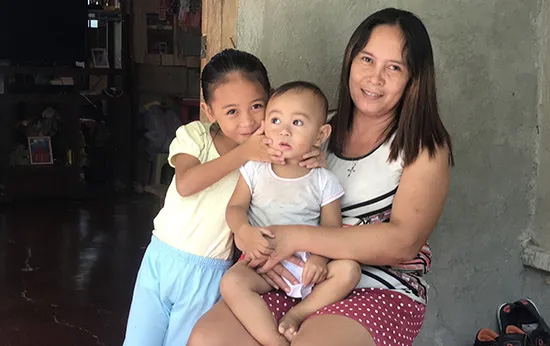
A recent UNICEF USA report on the impact of financial inclusion on children reinforces something many microfinance institutions have believed for years: when families gain access to financial tools, children benefit too.
The report, developed in partnership with 60 Decibels, Global Partnerships, and VisionFund, examines how microfinance affects household well-being through a “child lens,” meaning it explicitly looks at how financial services influence outcomes for children. The findings are based on large-scale borrower surveys across multiple regions and reflect the lived experience of tens of thousands of families who’ve participated in microlending programs.
One of the most important insights is also the simplest: caregivers consistently report that access to microfinance improves household stability, financial resilience, and their ability to meet their children’s basic needs.
Families with access to financial services were more likely to report improvements in savings behavior, emergency preparedness, nutrition, education spending, and overall child well-being. In other words, financial inclusion extends outward into the household.
This aligns closely with the ethos that has guided WorldWise Microfinance since its inception. Microfinance is not just about access to credit or financial tools. It is about enabling families, especially mothers, to build stability, invest in opportunity, and create a more secure future for their entire community.
Our own data tells a similar story. Through borrower surveys, we have seen families report eating more nutritious foods and children attending school at higher rates after a caregiver receives a microloan.
Before receiving a loan, each borrower completes a Progress out of Poverty Index (PPI) survey. Because many borrowers go on to take a second and third loan, they complete the survey again before each new loan cycle, allowing us to track changes over time. Year after year, the results show what this latest research confirms: when families gain access to financial tools and opportunities, the benefits extend well beyond income. They improve the health, education, and well-being of children. We publish these findings annually as part of our commitment to measuring and sharing our impact.
These reports make it clear that microfinance should be understood as a multi-generational intervention. When a mother gains access to capital, she is more likely to invest in her children’s health, education, and long-term security. She is also more likely to build sound financial habits, such as saving and planning for emergencies, which strengthens the household as a whole over time.
For organizations like WorldWise Microfinance, this is not a new conclusion but a powerful validation. Behind every loan is a child whose future is being shaped in real time. Your support helps make that future brighter.