

By: Thomas Boyd
An economics professor, Shawn Humphrey at the University of Mary Washington, came up with the “Month of Microfinance” idea in 2012. He challenged students to live on $2 a day, and the challenge spread to many other schools. Dr. Humphrey showcased the work of Muhammad Yunus and Grameen, much as WorldWise Microfinance founder Tom Eggert was doing at the same time.
Now, in April 2026, a Month of Microfinance is the right time to address some of the common criticisms of micro lending. There have been naysayers and skeptics who have discounted the movement and who have raised questions about it. We have answers to those questions.
Some argue that microfinance doesn’t really end poverty. They point to studies that “prove” poverty still grips borrowers and their communities. We rely on Yunus himself to put this criticism in context: “If you want to get people out of poverty, don’t look at the poor people. Look at the system that is responsible for creating that poverty.” We are committed to a world without extreme poverty, but we are realistic in our approach, “improving lives one by one.” We do not claim to be able to dismantle systems that keep people poor.
Microfinance has, unfortunately, spawned predatory lending practices, with interest rates running as high as 80-100 percent. Globally, the average interest rate is 35 percent. No wonder some borrowers fall deeper into debt and default on their loans. We reject such usury, and we maintain a modest 1 percent per month rate.
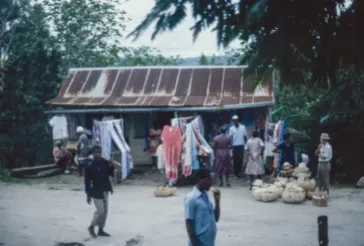
Critics have claimed that borrowers don’t really want to manage small businesses, they they’d rather take better-paying jobs in nearby factories or companies. This might make sense to poor people living in major population centers – but what about those living in remote, rural areas of a country? Poor women and their families who are cut off from commercial hubs are prime candidates for small loans and make up most of our borrowers.
Finally, there’s a persistent notion that a woman who accepts a small loan is not able to guarantee repayment, that she is often isolated and victimized by menacing collection agents, and therefore a bad risk for loans. Our borrowers are part of a local small group of women (occasionally a man or two!) who are a peer support circle, with second-round loans contingent on repayment by everyone in the group. Our loans are administered by locally based partners that are credible community organizations and help us compile an enviable record: 88 percent of our loans go to women, with a 97 percent repayment rate over 15 years.
We don’t make promises we can’t keep. Our small microfinance program is no match for the groaning weight of global poverty. But this April, we’re reminded of the thousands of borrowers who have made it work. And we’re dedicated to planting more seeds that can improve lives one by one.
Photo credit: Annie Spratt